

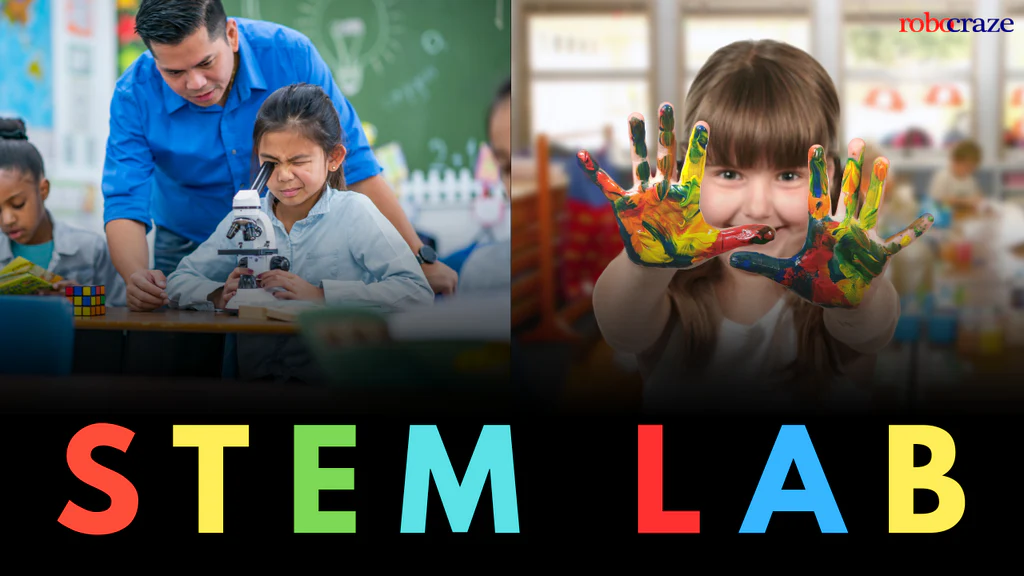
Education is changing fast. Schools now focus on skills that prepare students for future jobs and real-world challenges. One of the biggest changes in modern learning is STEM education. STEM stands for Science, Technology, Engineering, and Mathematics. It helps students think creatively, solve problems, and build practical skills from an early age.
Today, many schools also add Robotics and AI Labs to improve STEM lab in school. These labs give students hands-on experience with coding, robotics, automation, electronics, and artificial intelligence. Students learn by doing real activities instead of only reading textbooks.
At ADU Education, students explore future-ready technologies through interactive robotics and AI programs designed for modern education.
What Does STEM Education Mean?
STEM education combines four important subjects into one learning system:
- Science
- Technology
- Engineering
- Mathematics
Instead of teaching these subjects separately, STEM connects them through projects, activities, and experiments. Students use logic, creativity, teamwork, and innovation to solve real problems.
For example, a student may build a smart robot using:
- Science for understanding sensors
- Mathematics for calculations
- Engineering for robot design
- Technology for coding and automation
This method makes learning more practical and interesting.
Why STEM Education Is Important for Students
The future job market depends heavily on technology and innovation. Many industries now require digital skills, analytical thinking, and problem-solving ability. STEM education helps students develop these skills early.
Here are some major benefits of STEM learning:
Builds Problem-Solving Skills
Students learn how to identify problems and find solutions step by step. This improves logical thinking and decision-making.
Encourages Creativity
STEM projects allow students to create new ideas, models, apps, and robots. Students use imagination along with technical skills.
Improves Teamwork
Many STEM activities happen in groups. Students learn communication, collaboration, and leadership.
Prepares Students for Future Careers
STEM education supports careers in:
- Artificial Intelligence
- Robotics
- Software Development
- Data Science
- Engineering
- Cybersecurity
- Space Technology
- Medical Technology
According to World Economic Forum, analytical thinking and technology skills remain among the top future workplace skills.
What Is a Robotics Lab?
A robotics lab is a special learning space where students design, build, and program robots. Students use hardware tools, sensors, motors, coding platforms, and AI technologies to create working projects.
Modern robotics labs often include:
- Coding systems
- Arduino and microcontrollers
- AI learning kits
- IoT devices
- Automation tools
- Electronic components
- 3D models and smart sensors
These labs make learning exciting because students interact with real technology.
Why Robotics Labs Matter in Schools
Robotics labs help students move beyond theory. They learn through hands-on practice and experimentation.
Practical Learning Experience
Students understand concepts faster when they build projects themselves. Robotics converts classroom knowledge into real applications.
Early Exposure to AI and Automation
Artificial Intelligence and automation already shape industries worldwide. Robotics labs introduce students to these technologies at the right age.
Boosts Confidence
When students build and test robots successfully, they feel motivated and confident. They become more curious about technology.
Develops Coding Skills
Coding is now an essential future skill. Robotics labs teach students programming in an easy and engaging way.
Makes Learning Fun
Interactive projects, robot competitions, and AI activities increase student interest in education. Students enjoy learning instead of memorizing.
How Robotics Labs Support STEM Education
Robotics labs work as practical centers for STEM learning. Students apply science, technology, engineering, and mathematics together while creating projects.
For example:
- Students use mathematics for robot movement calculations.
- They use science to understand sensors and electricity.
- They apply engineering to design robot structures.
- They use technology and coding to control robot actions.
This integrated learning approach improves understanding and retention.
Future Skills Students Learn Through Robotics Labs
Robotics education helps students build important future-ready skills such as:
- Critical thinking
- Coding and programming
- AI fundamentals
- Communication skills
- Innovation mindset
- Leadership qualities
- Data analysis
- Technical confidence
These skills help students succeed in both academics and future careers.
Why Schools Should Invest in Robotics and AI Labs
Schools that adopt robotics education create stronger learning environments. Parents also prefer schools that offer modern technology education.
Benefits for schools include:
- Better student engagement
- Improved academic performance
- Stronger school reputation
- Future-ready curriculum
- Increased admissions interest
- Competitive advantage in education
AI and Robotics Lab in School also support experiential learning, which modern education systems strongly encourage.
The Future of Education Is Technology Driven
Technology continues to transform education globally. AI, robotics, coding, and automation will become essential parts of future classrooms.
Students who learn these skills early gain a major advantage. They become better prepared for college, careers, entrepreneurship, and innovation.
Schools that introduce STEM Lab Setup and robotics programs today help students become tomorrow’s engineers, scientists, developers, innovators, and leaders.
FAQs
What is STEM education in simple words?
STEM education combines Science, Technology, Engineering, and Mathematics into practical learning activities that improve problem-solving and innovation skills.
Why are robotics labs important in schools?
Robotics labs give students hands-on experience with coding, AI, automation, and engineering. They make learning interactive and future-focused.
At what age can students start learning robotics?
Students can start basic robotics learning from primary or middle school levels. Many schools introduce robotics from Class 3 onward.
Does robotics education help in future careers?
Yes. Robotics education supports careers in AI, software development, engineering, automation, cybersecurity, and many technology industries.
Can students learn coding through robotics?
Yes. Robotics labs teach coding in an engaging and practical way through robot programming and project-based activities.
What skills do students gain from STEM education?
Students develop critical thinking, creativity, teamwork, communication, coding skills, analytical thinking, and leadership abilities.
Why do parents prefer schools with robotics labs?
Parents prefer modern schools that prepare children for future careers and technology-driven industries through practical learning methods.
How does AI connect with robotics education?
AI helps robots make decisions, recognize patterns, and perform smart actions. Robotics labs often introduce students to AI basics through projects and automation activities.
Author Profile

- Anand Prakash is an education technology expert and STEM learning advocate associated with ADU Education. He is passionate about Robotics, Artificial Intelligence (AI), Coding, and future-ready education solutions that help schools and students build practical technology skills for the modern world.

Leave a Reply