Official Arduino UNO Q SBC 2GB ABX00162
https://www.youtube.com/watch?v=nddY1yz7-Y4
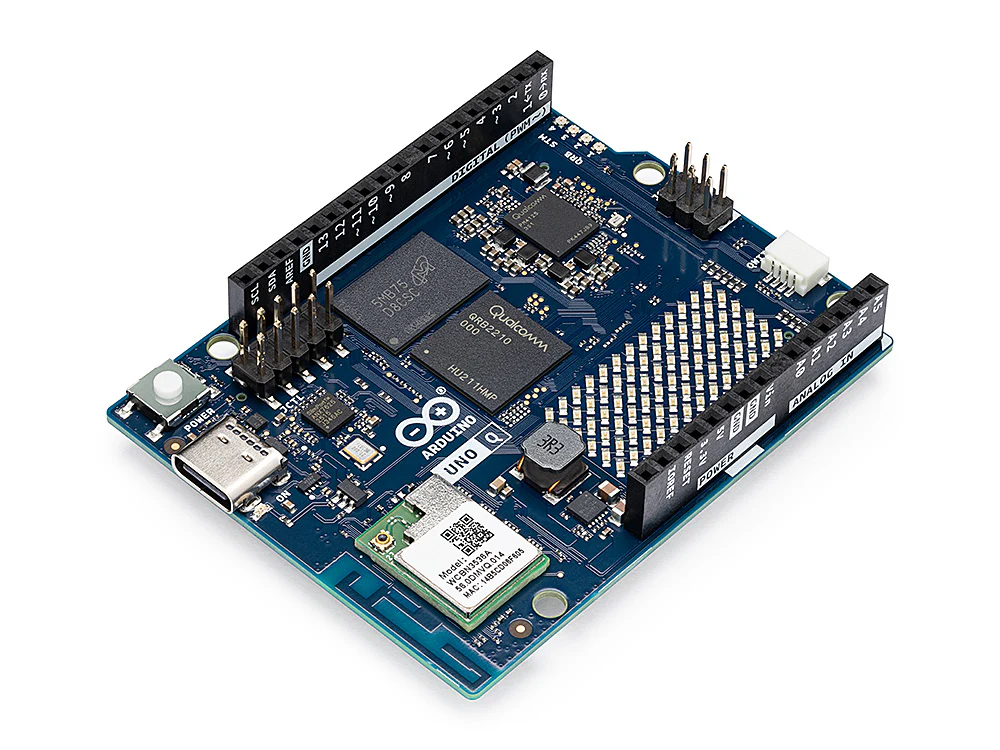
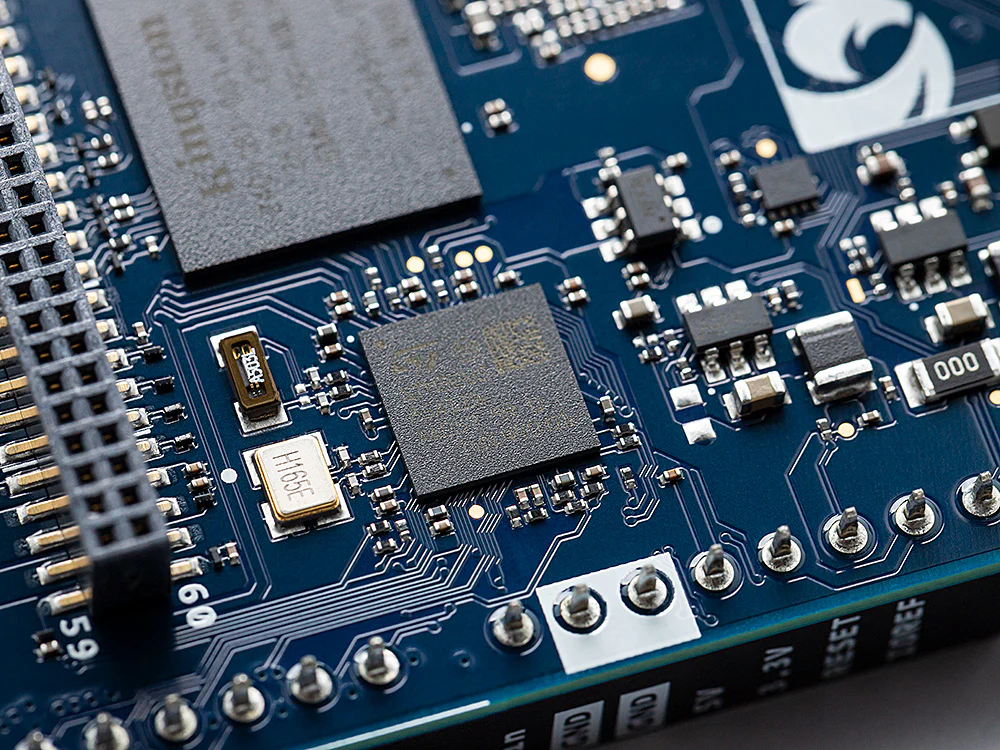
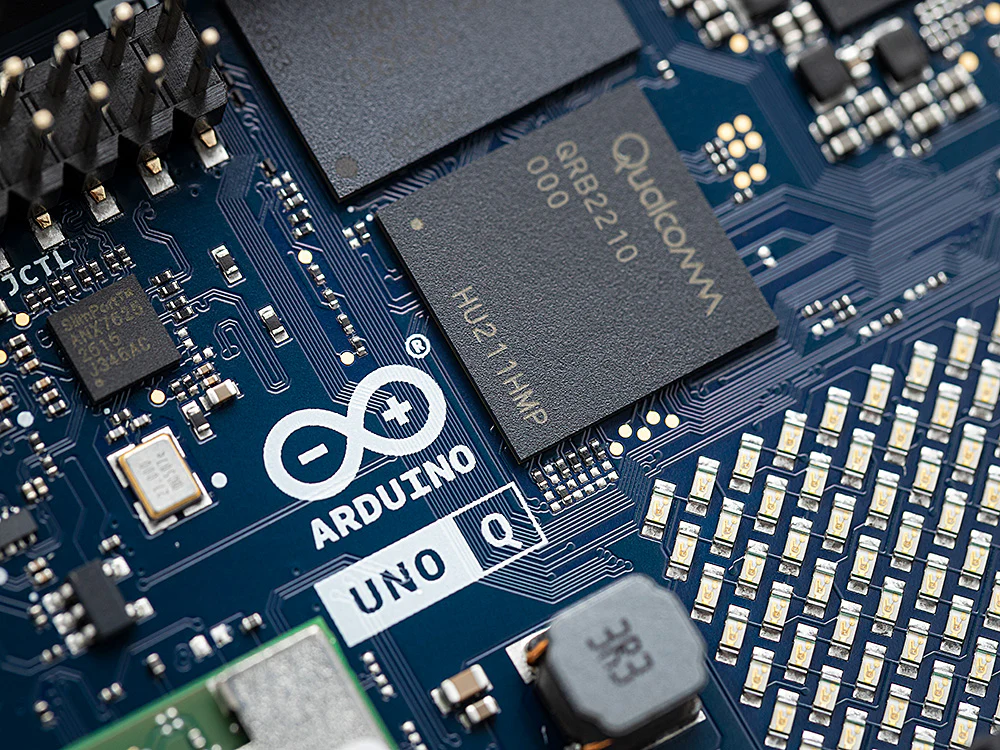
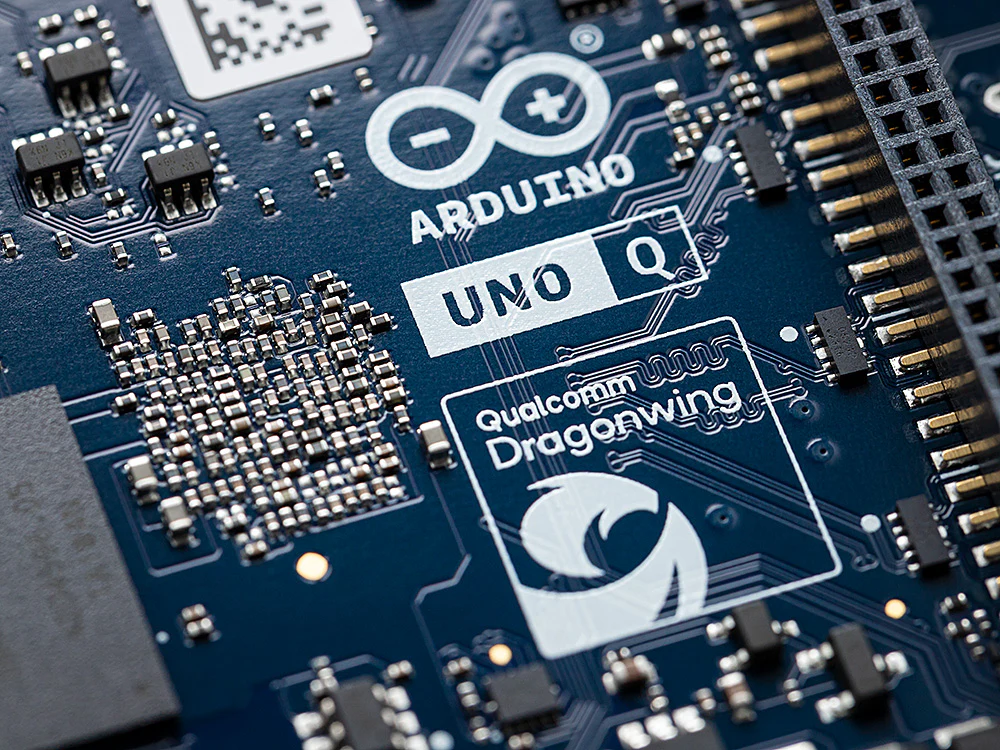
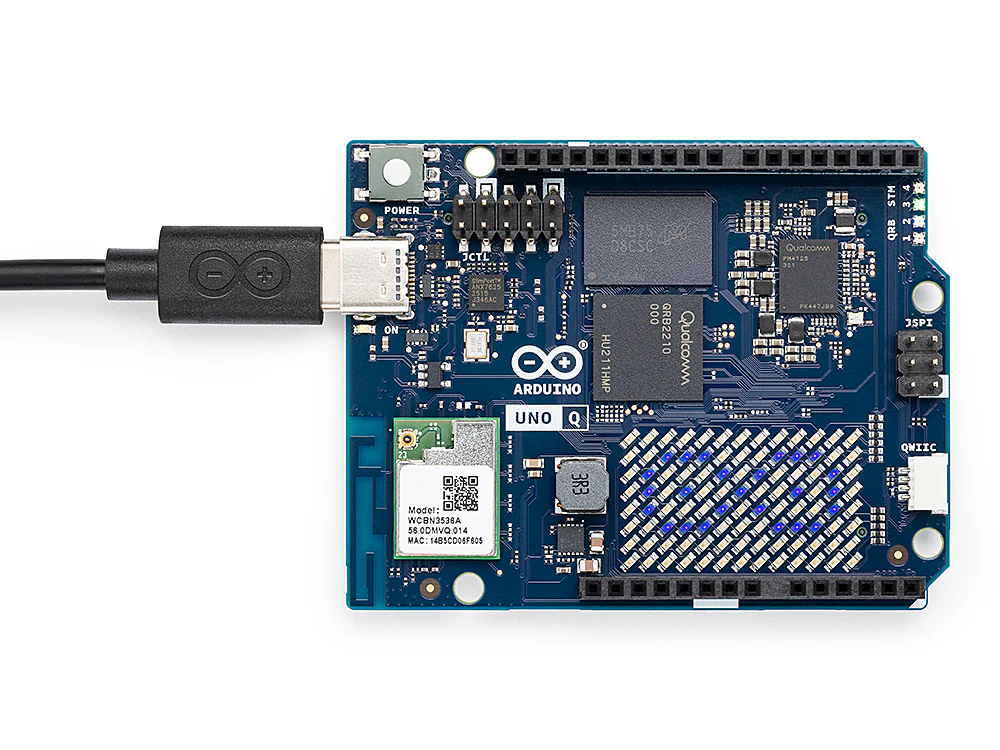
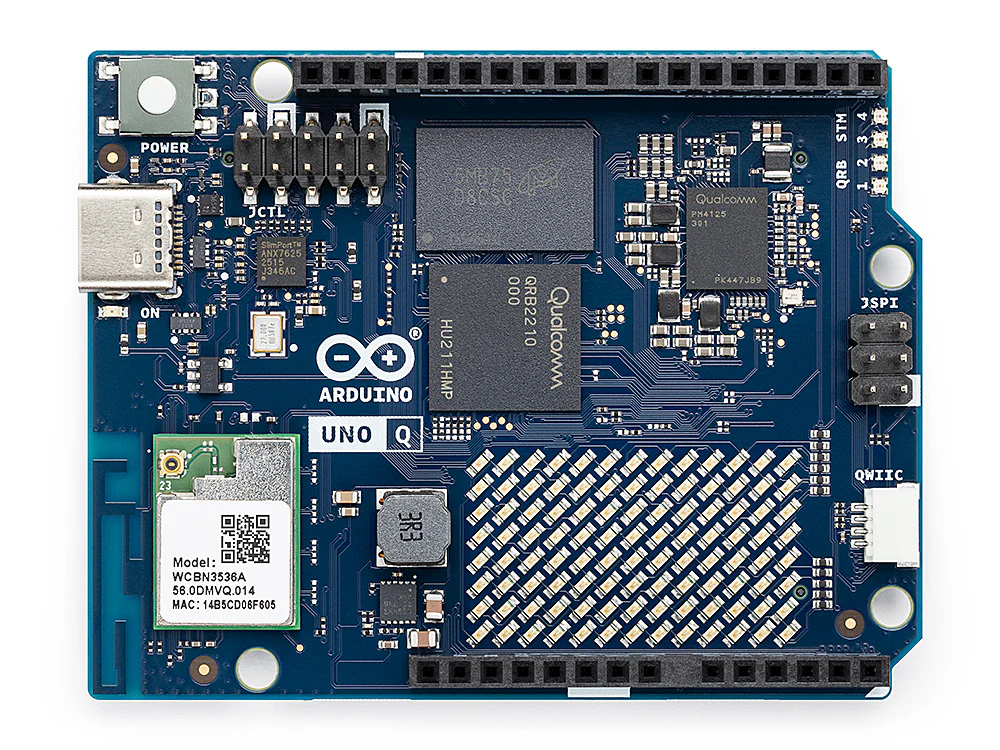
Hybrid design makes Arduino UNO Q the perfect dual-brain platform for your next innovation. It combines a Linux® Debian-capable Qualcomm® Dragonwing™ QRB2210 microprocessor with a real-time STM32U585 microcontroller (MCU). It’s Arduino, it’s a computer, it’s anything you want to build.
This variant of Arduino UNO Q features 2 GB of RAM and 16 GB of eMMC, making it the best choice if:
- You intend to develop code for UNO Q in the familiar, PC-connected mode, and your project basically requires running the OS, Python scripts, and basic network services accessed remotely (SSH) – no demanding GUI.
- You plan on the microprocessor running one primary application, without heavy multitasking.
- Your project leverages no AI or lightweight Edge AI, relying on memory-optimized TinyML applications.
- You just need local storage for basic OS and core libraries.
Arduino UNO Q is the go-to tool to prototype your next robotics or IoT project, thanks to:
- All-in-one toolbox: Arduino UNO Q combines the powerful Qualcomm® Dragonwing™ QRB2210 microprocessor (MPU) with a real-time STM32U585 microcontroller (MCU) – no matter what you’re building, it’s your new go-to tool!
- AI in a blink: unlock AI-powered vision and sound solutions that react to their environment.
- Arduino support and developer tools including libraries, sketches, and projects developed for the UNO ecosystem by millions of users.
- Compatible with the Arduino UNO ecosystem: UNO Q works with a wide range of Arduino hardware, from classic UNO shields to new carriers, and includes a Qwiic connector for Modulino® nodes and third-party modules.
- Streamlined software experience: in addition to Arduino IDE and Arduino Cloud, you can jumpstart development with plenty of pre-built examples and AI models available through Arduino App Lab.
- Seamless, unified development: build classic Arduino Sketches, code in Python® thanks to the pre-installed Linux® Debian OS, or mix the two from a single interface – it’s easy, with Arduino App Lab.
 What is Arduino App Lab?
- Unified Dev Experience
App Lab is a brand-new integrated development environment that unifies the journey across Linux® and real-time OS.
Preloaded on the UNO Q, App Lab combines Arduino Sketches, Python® scripts, and containerized AI models into fully integrated applications all managed from a single interface.
- Ready-to-use Apps and Bricks
Get started fast with Arduino Apps, self-contained examples with everything you need. Add plug-and-play features to your projects with pre-built Bricks to accelerate your ideas even more.
- Pre-loaded AI Models
With pre-loaded AI models in Arduino App Lab, you can leverage the real-world data for a wide range of capabilities such as object/human detection, anomaly detection, image classification, sound recognition, and keyword spotting.
Find out more in our official documentation.
Tech specs
| Microprocessor (MPU) |
Qualcomm Dragonwing™ QRB2210:
Quad-core Arm® Cortex®-A53 @ 2.0 GHz
Adreno GPU 3D graphics accelerator
2x ISP (13 MP + 13 MP or 25 MP) @ 30 fps |
| Microcontroller (MCU) |
STM32U585
Arm® Cortex®-M33 up to 160 MHz
2 MB flash memory
786 KB SRAM |
| RAM |
2GB LPDDR4 |
| Power Supply |
From USB-C connector 5 V max at 3 A
Input Voltage (VIN): 7-24 V |
| Storage |
16GB eMMC |
| USB |
1× USB-C port with host/device role switching, power role switch and video output |
| Connectivity |
Wi-Fi® 5 2.4/5GHz with onboard antenna
Bluetooth® 5.1 with onboard antenna |
| Interfaces |
I2C/I3C
SPI
PWM
CAN
UART
PSSI
GPIO
JTAG
ADC |
| Video |
Video output support via USB-C
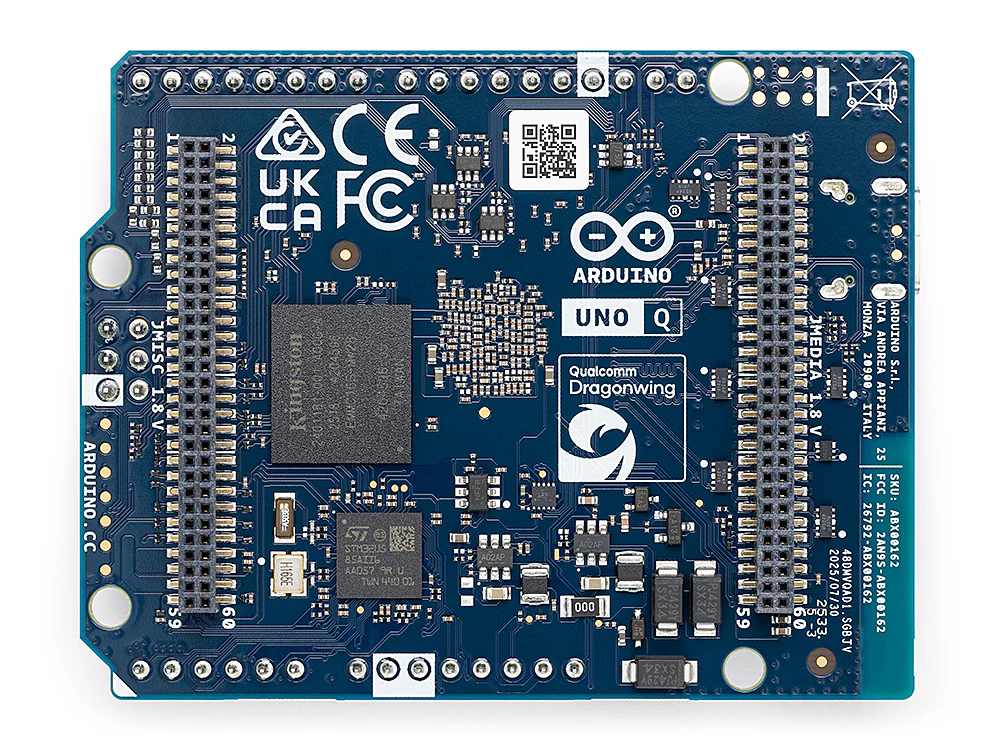
MIPI DSI pins on JMEDIA header |
| Extra |
4× RGB user-controllable LEDs
8×13 Blue LED Matrix
1x Qwiic connector voltage 3V3, I2C
1x User push-button
JCTL: MPU Remote Debug connector |
| Audio |
Microphone IN / Headphone OUT / Line OUT on JMISC |
| Dimensions |
68.85 mm x 53.34 mm (UNO form factor) |
| MPU Operating System |
Linux Debian OS with upstream support |
| Real-time Operating System |
Arduino Core on Zephyr OS |
| Containerization |
Docker and Docker Compose support |
| Support Operating Systems for Arduino App Lab |
Windows: Windows 10 or later (64-bit)
macOS: macOS 11 or later (64-bit)
Linux: Ubuntu 22.04 or later, and Debian Trixie (64-bit) |
There are no reviews yet.