

Introduction
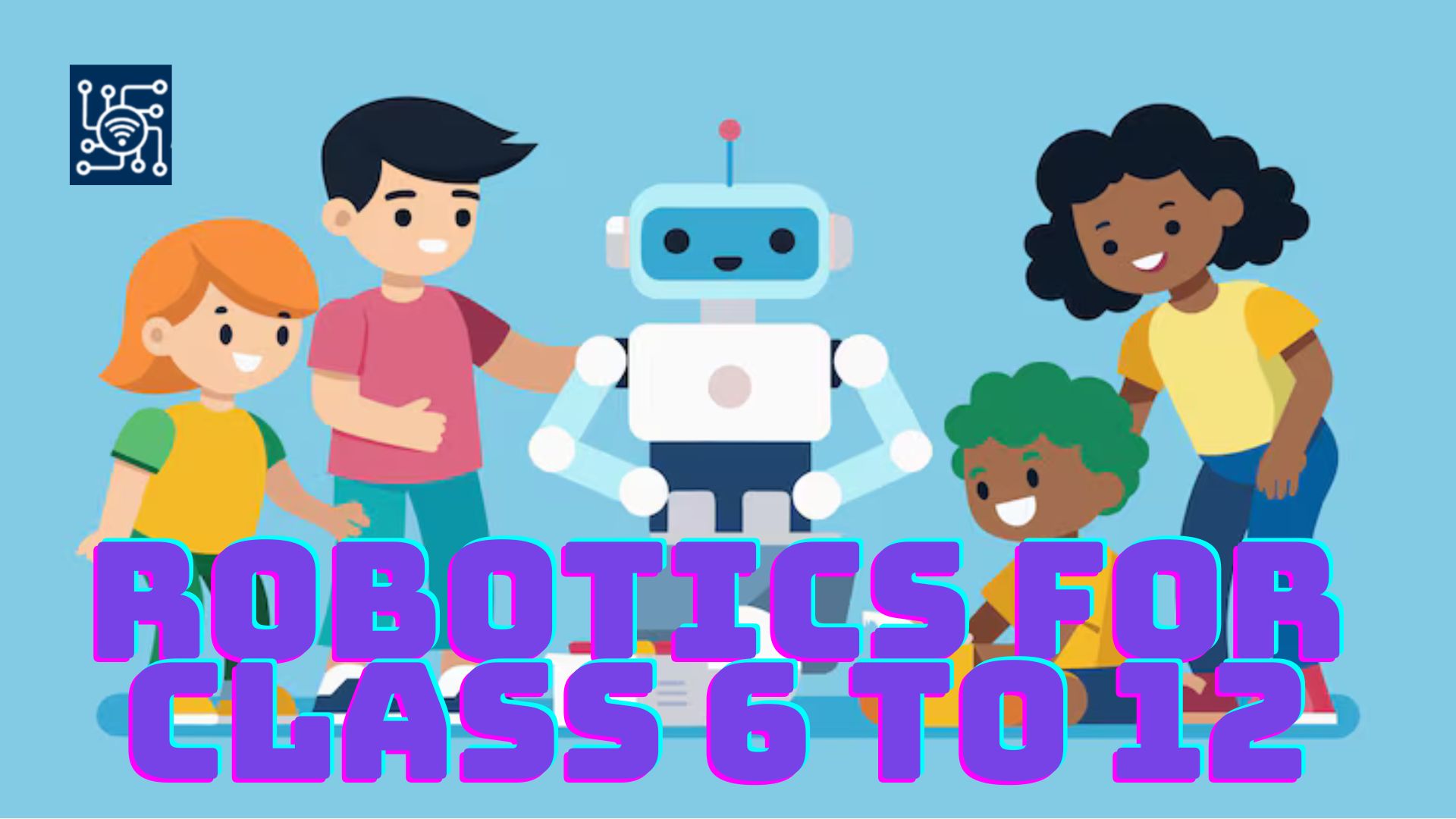
Imagine a classroom where students don’t just read about engineering — they build robots, program them, and watch their creations come to life. That’s exactly what’s happening in schools partnered with ADU Education across Madhya Pradesh.
Robotics education is no longer reserved for elite colleges or specialized institutes. Today, students from Class 6 onwards are learning the fundamentals of robot design, automation, and programming — skills that were once considered post-graduation territory.
In this blog, we break down exactly what students learn in ADU Education’s certified robotics program, how the curriculum is structured across different class levels, and why this knowledge is one of the most valuable investments a student can make in their future.
Why Robotics Education Matters in India Today
India is at a pivotal moment. With the government’s push toward STEM, the National Education Policy (NEP 2020) emphasis on experiential learning, and industries rapidly adopting automation and AI, the demand for robotics-skilled professionals is exploding.
Consider these realities:
- India’s robotics market is projected to reach ₹4,200 crore by 2027, growing at 15% annually.
- Manufacturing, agriculture, healthcare, and logistics sectors are actively hiring automation engineers.
- Students who begin robotics in school have a 3–5 year head start over peers who start in college.
- Robotics builds critical thinking, problem-solving, and teamwork — skills valued across every career.
Robotics is not just a technical subject. It is a thinking framework. It teaches students how to approach a problem, design a solution, test it, fail, iterate, and succeed. That mindset is priceless.
The ADU Education Robotics Curriculum: Class-by-Class Breakdown
ADU Education’s robotics curriculum is carefully designed to match cognitive development stages. Younger students build intuition and excitement; older students develop depth, precision, and project ownership.
Class 6 & 7 — Foundations of Robotics
At this stage, the focus is on curiosity, exploration, and foundational concepts. Students learn that robots are machines that sense, think, and act — and they build their first working models.
Key learning outcomes:
- What is a robot? Types and real-world applications
- Basic electronics: circuits, sensors, actuators
- Introduction to block-based programming (Scratch, Blockly)
- Building simple wheeled robots with pre-assembled kits
- Understanding gears, levers, and mechanical motion
- First project: A line-following robot
Class 8 & 9 — Intermediate Robotics & Programming
Students now move from pre-built kits to designing their own circuits and writing code from scratch. This is where abstract thinking begins to connect with real engineering.
Key learning outcomes:
- Introduction to Arduino microcontrollers and programming in C/C++
- Sensor integration: ultrasonic, infrared, temperature, light
- Motor control: DC motors, servo motors, stepper motors
- Building obstacle-avoidance and object-detecting robots
- Basic Artificial Intelligence concepts in robotics
- Team-based project: An autonomous sorting machine
Class 10 — Advanced Robotics & Real-World Applications
Class 10 marks the transition to complex systems. Students begin integrating multiple technologies — mechanical, electronic, and software — into cohesive projects.
Key learning outcomes:
- Introduction to Raspberry Pi and single-board computers
- Python programming for robotics control
- Computer vision basics: cameras, image recognition
- Wireless communication: Bluetooth, Wi-Fi modules
- Introduction to Robot Operating System (ROS)
- Capstone project: A camera-guided pick-and-place robot arm
Class 11 & 12 — Professional-Grade Robotics & Innovation
At the senior level, students operate at a near-professional standard. Projects are complex, original, and in many cases, competition-ready or industry-relevant.
Key learning outcomes:
- Machine Learning integration: training robots to learn from data
- Autonomous navigation: SLAM (Simultaneous Localization and Mapping)
- Humanoid robot design and control systems
- Industrial automation: PLCs, conveyor systems, robotics arms
- Ethics of robotics and AI in society
- Capstone innovation project: Presented to industry experts and judges
Skills Overview at a Glance
The Power of Hands-On Learning
ADU Education’s philosophy is simple: students learn best when they build, break, and rebuild. Every concept is tied to a physical or digital project. There are no passive lectures in robotics class.
Our labs are equipped with:
- 200+ robotics components including motors, sensors, microcontrollers, and 3D-printed parts
- Dedicated workbenches for individual and team projects
- Computer stations with simulation software (Webots, Gazebo, TinkerCAD)
- Safety-first design with supervised assembly and soldering areas
- A showcase area where student projects are permanently displayed
“My daughter built a robot that waters plants automatically. She’s in Class 8. I never thought school could look like this.”
— Parent, ADU Education Partner School, Rewa
Career Paths That Open Up with Robotics Skills
Students who complete the ADU Education robotics curriculum are not just prepared for exams — they are prepared for life. Here are some of the career pathways that open up:
Competitions & Recognition: Where Students Shine
ADU Education students regularly participate in and win national and state-level competitions. These events do more than award trophies — they build confidence, sharpen presentation skills, and create a portfolio that colleges and employers notice.
Competitions our students participate in:
- ATAL Innovation Mission — Government of India’s flagship STEM competition
- WRO (World Robot Olympiad) — India Regionals and Nationals
- Robocon India — College-level competition our senior students enter early
- Science Olympiad Foundation (SOF) — Robotics & Coding divisions
- State-level Innovation Expos organized by ADU Education itself
A Note for Parents: What to Expect
We know that investing in an additional program for your child requires thought. Here’s what you can expect when your child joins ADU Education’s robotics program:
- Safety first. All labs follow strict safety protocols. Students work with age-appropriate components under certified instructor supervision.
- No prior experience needed. The program starts from zero. Whether your child is tech-savvy or a complete beginner, the curriculum is designed to meet them where they are.
- Regular updates. Parents receive monthly progress reports and are invited to project showcase events where children demonstrate their robots.
- Real certification. Students receive an ADU Education Certificate of Completion that is recognized by partner schools and valued by engineering colleges.
- It is fun. We hear it constantly from parents: their child can’t wait for robotics class. Engagement is never a problem when kids are building real things.
Conclusion: The Best Time to Start is Now
Robotics education is not a luxury add-on. It is quickly becoming a core life skill — as fundamental as mathematics or English — in a world where machines, automation, and intelligent systems are everywhere.
The students who start learning robotics in Class 6 will be the engineers, innovators, and entrepreneurs of 2035. And they will have a decade of hands-on experience behind them before they even graduate college.
ADU Education’s certified robotics courses gives every student — regardless of background or prior knowledge — the tools, mentorship, and environment to become that person.
Ready to get your child started in robotics?
Visit aduedu.in/admission or call +91 7566684701
Enrolments open for the June 2026 cohort — limited seats per school.
Author Profile

Latest entries
 AICTE Idea LabMay 29, 2026AICTE IDEA Lab Equipment List: What Colleges Need for Future-Ready Technical Education
 AIMay 28, 2026NEP 2020 and Robotics Labs: Why Schools Must Upgrade Their Learning Model
 AIMay 15, 2026Future of Education: AI, Coding & Robotics
 EducationMay 11, 2026How Technology Education Builds Leadership Skills in Students

Leave a Reply